
In this occasional series, we will look at old and new businesses and trace what went wrong along the way.
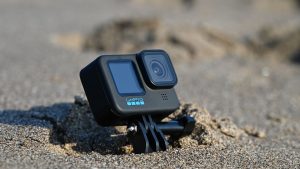
Photo by Dhenny Napitupulu from Pexels
GoPro started out as all good business ideas do. A problem was identified by the entrepreneur, a solution was created, and then the solution was executed at a level that made growth unavoidable. The problem is that the solution was easy to replicate. When being cool no longer cuts it, the business must continue to innovate or become stagnant. Unfortunately, GoPro has suffered from the latter and was recently purchased by Starman Optical for only $285 million, more than $10 billion less than its highest valuation.
So what happened, and why did they fall so far?
The Beginning
GoPro started out as the answer to a problem faced by its founder, Nick Woodman. After having a business venture fail, he decided to take some time away to think about his next steps. That time away turned out to be a surfing trip to Southeast Asia, in pursuit of big waves and the simple life. While chasing waves, he wanted a better way to capture his surfing adventures, and the current options were either self-operated and bulky and clunky, or they depended on someone else operating them from a distance. What Nick wanted to achieve was a camera that could capture the user’s perspective from the action. Thus, the action camera was created and began to make a name for itself among action athletes and adventurers.
The advantage of pioneering a new market is that you get to define the path of technological growth. The name GoPro became synonymous with not only cameras that could be used underwater or in high-impact pursuits, but also with the action sports for which they were used to capture video and photos. The company’s name is even a reference to going pro, by capturing your own exploits and using them to gain a following, and perhaps even sponsors.
The Rise
As the market grew, so did the notoriety with which GoPro could leverage. YouTube was starving for user-filmed video, and GoPro made uploading simple. The editing software made available by GoPro also simplified the process of making content video-ready, and adding the GoPro logo in the corner of the screen helped the business gain even more traction. The results showed that not only was the GoPro business growing, but so was the community that used their offerings and helped promote the brand. When GoPro went public in 2014, its stock price was $24 per share. Surging demand for action cameras and high profit margins for the company meant that GoPro reached a $11 billion valuation at its peak, with its CEO compensated in the hundreds of millions of dollars. The business seemed like a juggernaut, and the community that had helped build it could not get enough of its technology.
The Fall
Unfortunately, GoPro did not adequately consider the vulnerability of its market-share lead. They grew the business with little competition. The tech that could compete lacked the community that GoPro had helped foster, and that community was loyal to GoPro and its ethos of making high-end action photography accessible to amateurs without requiring a thousand-dollar investment.
Once other companies were able to provide those same features, sometimes at even higher quality and lower prices, GoPro’s grasp on the market began to falter. Action cameras were flooding the market, and even personal cell phones were starting to ship with image-stabilizing features and autofocus at higher clarity than GoPro could offer. The advantages GoPro had held were squandered, and the competition caught up.
GoPro turned to subscription services to boost revenue from its loyal supporters, but it proved to be a short-term improvement. As the lifespan of cameras extended and the number of models grew, people just stopped buying the cameras as often. The brief foray into the drone market proved troublesome, with product failures damaging the brand at a time when they could least afford a user defection. Their failure to build better infrastructure for users when demand was at its highest meant they lacked the requisite traction when they did move.
Ultimately, the company was just overmatched by cheaper competitors. While they did help create the action camera market, listing more than 2500 patents, they were unable to sustain their business model. Starman plans to combine GoPro’s massive IP library with its own optics technology to develop advanced AI-grade hardware, including for potential use in drone technology, ironically enough.
What GoPro represents is the meteoric rise of a brand that provided a solution to a niche market it helped pioneer and grow. The failure to capitalize on its lead from the market’s infancy by continuing to advance the technology was its ultimate downfall, as it allowed everyone not only to catch up but also to surpass it. Indecision and missteps are difficult to recover from in the tech world, and even its loyal users and promoters could not save GoPro from the inevitable acquisition by another company. What we saw with Topgolf was an expansion that led to its downfall. For GoPro, a lack of growth in its offerings proved insurmountable. A new business must have a clear direction and continue pursuing growth and advancement if it wishes to keep its edge in a capitalist market. Otherwise, it is just a matter of how long it can fend off other companies that use its own learnings against it.
If you are looking to buy into a business success story, let us help.